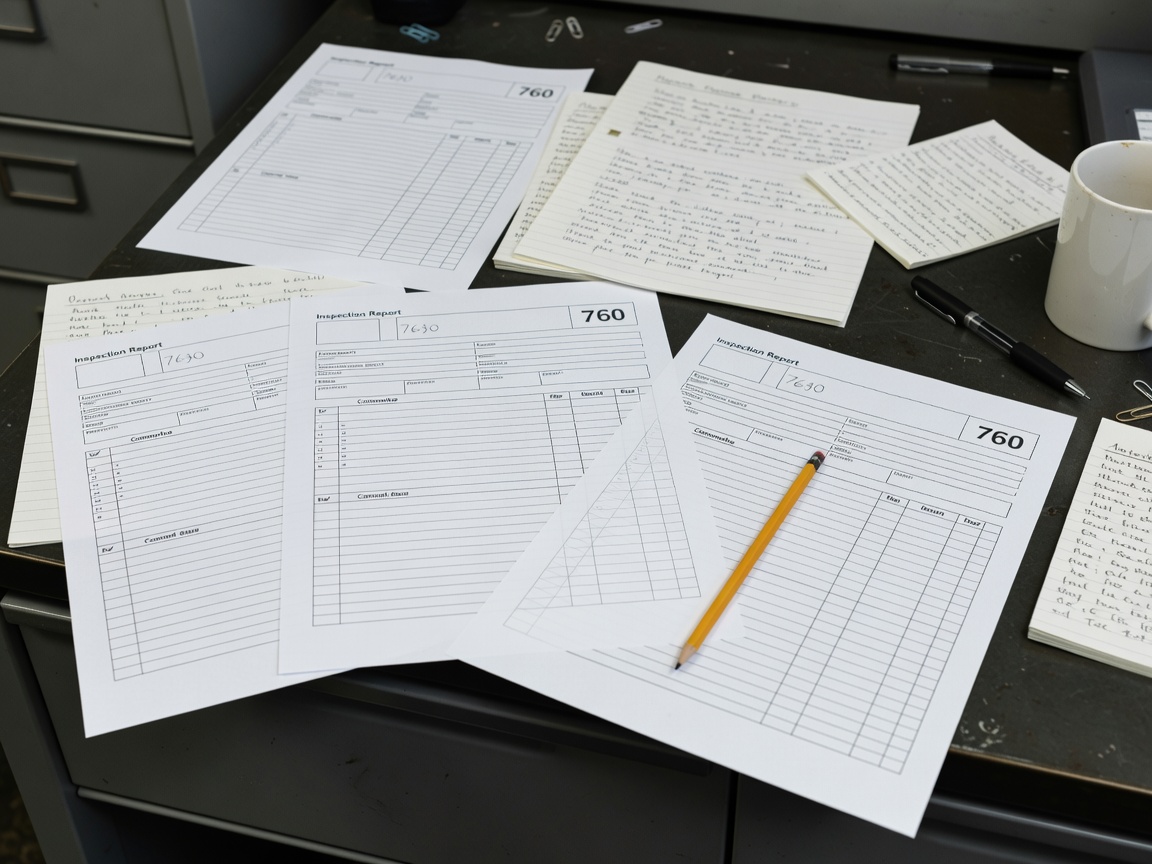
A report should help an owner understand what was reviewed, what was visible and what requires action. It should be readable by the people managing the facility and communicating with contractors.
Report structure
A practical record identifies the facility, inspection date, scope, limitations, building elements and observation references. Photographic records work best when each image has a location, subject and related note. A context image and a detail image can serve different purposes.
Classify issues
Issue categories may separate routine maintenance, planned repair, monitoring and specialist review. The category system should be agreed for the project. It should not imply a universal risk rating or an engineering conclusion. Illustrative examples are only examples, not fabricated findings.
Maintenance priorities
Priorities can consider safety controls, deterioration, operational impact, weather exposure and the availability of specialist advice. A follow-up action may be a qualified assessment, contractor quotation, controlled repair or later comparison. It should identify an owner and a review point where practical.
Inspection history
Consistent building names, locations and photo references make recurring observations easier to identify. Historic records should preserve dates and limitations. A changed viewpoint, repaired surface or altered use can affect comparison. Do not treat absence from an old record as proof that a condition was absent.
Key observations
Clear writing uses short descriptions and avoids unsupported certainty. “Visible staining below the northern gutter” is an observation. “Failed waterproofing caused the damage” is a diagnosis that may require further evidence.
What to prepare
Prepare existing reports, asset lists, contractor records, photographs, maintenance schedules and contact details for responsible parties. Define who receives the report and who can authorise follow-up. Keep specialist documents with the relevant facility record.
Advantages and limits
Structured reporting improves continuity and communication. It does not replace design information, statutory advice, testing or specialist engineering assessment. Building conditions and requirements vary by location and circumstance.
Checklist
☐ Scope & limits ☐ Photo index ☐ Issue category ☐ Priority ☐ Owner ☐ Follow-up date
Discuss Reporting Requirements